

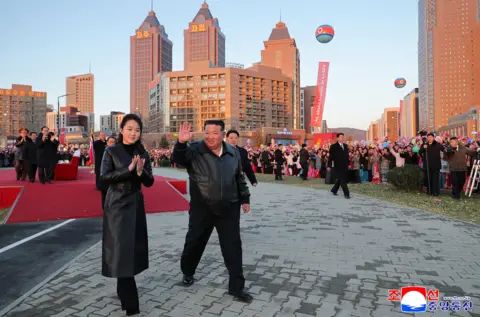
Amid warnings directed at South Korea and vows to grow the atomic arms arsenal, a central query lingered at the recent key meeting: might the supreme leader's teenage child be anointed as the successor?
Although unquestionable announcement failed to surface this week, it has fueled a widespread debate about the young girl's viability as the prospective leader of the populous country, a regime exclusively led by the Kim family bloodline.
Increased Presence and Analysis
The teenager has become increasingly present in state media with her leader. Yet, plenty about her remains shrouded in mystery. The regime has not once publicly disclosed her name or stated her date of birth.
Her existence was originally revealed abroad in 2013. Over the years, she is commonly thought to be 13 years old, partly on intelligence estimates.
Evidence of Future Leadership
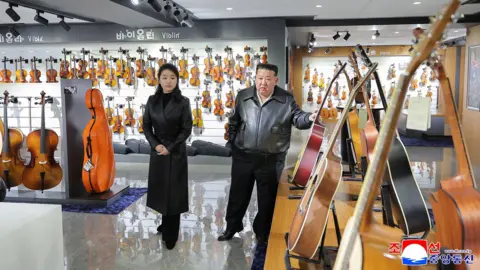
Experts highlight several significant indicators. Her prominent appearances—typically centered in the camera view—and the use of respected language typically used for the ruler are seen as compelling indicators.
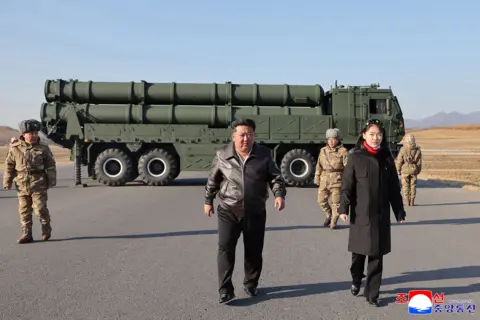
Moreover, her close association with the army is considered a further crucial element. She has observed troops and missiles together with her father. Multiple times, top commanders have been seen kneeling next to her to whisper during armed forces parades.
"The state media is employing words set aside for the ruler. It underlines her own cult of personality," notes one prominent analyst.
This military indoctrination is thought essential, as real authority in North Korea resides with dominance over the army. To be a effective heir, she must present herself as a competent leader.
Discussion Over Gender and Tradition
Nevertheless, a considerable skeptical perspective persists. Some analysts argue that North Korea's deeply male-dominated culture presents an formidable obstacle for a woman leader.
Observers highlight that women at every level find it hard for fair recognition. Female commanders in senior positions are very scarce. Everyday beliefs also demonstrate these norms.
"If they do, they finish the trip then go to the rear of their car and expectorate three times to remove the bad luck," describes a one-time North Korean insider.
Shifting Cultural Landscape
Alternatively, other observers suggest that the position of females in North Korea has transformed notably since the 1990s.
During that period, as the state sector collapsed, women frequently became the main entrepreneurs, engaging in informal business. This has apparently led to a slow shift in gender dynamics.
A researcher who has studied over 120 escapees states that it is currently less unusual to see females in administrative jobs within the country.

"It is wrong to analyze North Korea with outside perspective. We must consider them as the ancient kingdom," says the expert. "What person would dare oppose an individual of Paektu lineage who is taking the supreme position?"
Strategic Moves
Recent party appointments are also being scrutinized. The appointment of Kim Yo Jong, the leader's sister, to a influential ideological position is seen by some as a measure to position a mentor for the potential heir.
Finally, observers are split. Some see the spotlight on Ju Ae as a calculated ploy to humanize the leader's reputation and normalize another dynastic transfer of power. Others believe the evidence of her preparation are far too strong to ignore.
Irrespective, the debate alone may achieve a purpose for the leadership, keeping outside attention firmly locked on the isolated Kim family leadership.


